
The Real Reason Your Digital Marketing Isn’t Growing and How to Fix It Fast
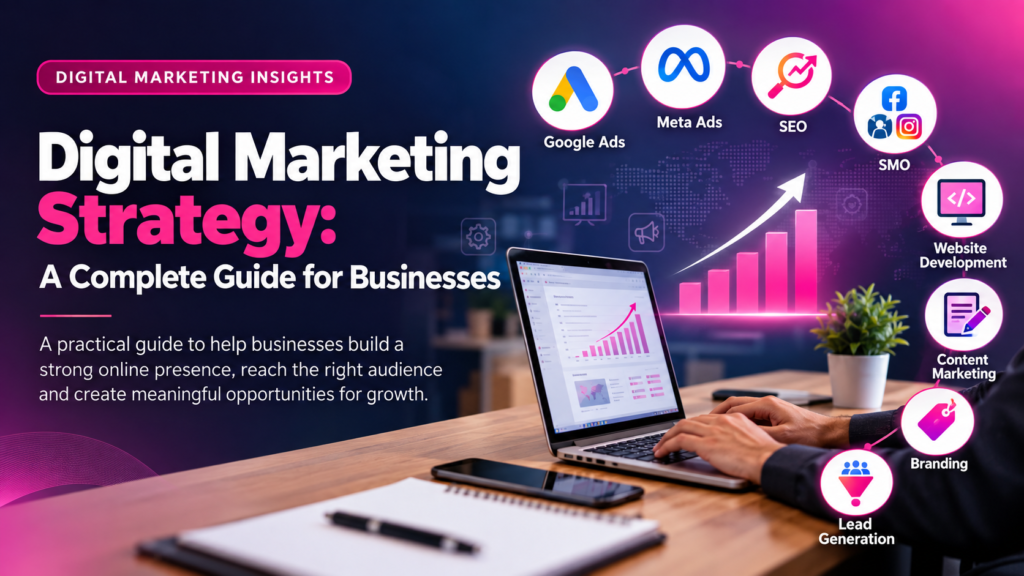
Digital Marketing Strategy: A Complete Guide for Businesses
By Smruti Ranjan Sadangi | Digital Marketing Expert
Category: Digital Marketing Tips
Reading Time: 7–8 minutes
Introduction
Having a website or social media profile is only the beginning of building a digital presence.
Today, businesses need to understand where their customers spend time online, what they search for, what information they need and what motivates them to take action.
A well-planned digital marketing strategy brings these activities together and gives your business a clear direction.
Whether you are a small business, startup, professional service provider or an established company, the right digital strategy can help you build visibility, connect with your audience and create opportunities for growth.
What Is a Digital Marketing Strategy?
A digital marketing strategy is a structured plan for using online channels to achieve specific business objectives.
Depending on your business, this may include:
- Google Ads
- Meta Ads
- SEO
- Social Media Optimization
- Website Development
- Content Marketing
- Branding
- Lead Generation
The important point is that these activities should not operate independently. They should work together around a common business objective.
1. Understand Your Business Goals
Before starting any campaign, define what you want your digital marketing to achieve.
Your goal might be:
- Increasing brand awareness
- Getting more website visitors
- Generating enquiries
- Increasing online sales
- Improving search visibility
- Building a social media presence
- Establishing a professional brand identity
A clear goal makes it easier to select the right channels and measure progress.
2. Know Your Target Audience
Effective marketing starts with understanding the people you want to reach.
Consider:
Who are your customers?
What problems are they trying to solve?
What products or services are they looking for?
Where do they search for information?
What factors influence their decision?
The answers can help shape your advertising, content, website and communication strategy.
3. Build a Professional Website
Your website can act as the central destination for your digital marketing activities.
A professional website should:
- Clearly explain what you offer
- Be easy to navigate
- Work well on mobile devices
- Communicate your brand effectively
- Make it easy for visitors to contact you
- Support search engine optimization
- Provide clear calls to action
Your advertising and social media efforts become more useful when visitors have a clear and professional place to learn about your business.
4. Use Google Ads to Reach Active Searchers
Google Ads can help businesses appear when people are actively searching for relevant products or services.
A campaign may involve:
Keyword research → Campaign setup → Ad creation → Landing page → Conversion tracking → Optimization
The objective isn’t simply to generate clicks. The focus should be on reaching relevant audiences and creating useful opportunities for the business.
5. Use Meta Ads to Reach Relevant Audiences
Facebook and Instagram provide opportunities to introduce your business to targeted audiences.
Meta Ads can be used for objectives such as:
- Brand awareness
- Website traffic
- Engagement
- Lead generation
- Retargeting
- Product or service promotion
Creative content, audience targeting and campaign structure all play an important role.
6. Invest in SEO for Long-Term Visibility
SEO helps improve the visibility of your website in search engines.
Important areas include:
- Keyword research
- On-page optimization
- Technical SEO
- Quality content
- Internal linking
- Local SEO
- Website performance
Unlike paid advertising, SEO is generally a longer-term activity. Consistency and useful content are important parts of building organic visibility.
7. Create Valuable Content
Content gives your business an opportunity to demonstrate knowledge and answer customer questions.
You can create:
- Blog articles
- Social media posts
- Guides
- Videos
- Infographics
- Case studies
- FAQs
- Website content
Good content should provide value rather than simply promote a product or service.
8. Build a Consistent Brand
Your audience should be able to recognize your business across different digital platforms.
Maintain consistency in:
- Logo
- Colors
- Typography
- Images
- Brand voice
- Messaging
- Website design
- Social media presentation
A consistent digital identity can help create a more professional and recognizable brand presence.
9. Turn Visibility Into Leads
Getting visitors to your website is only part of the process.
You should also make it easy for interested visitors to take the next step.
For example:
Website visitor → Service page → Call to Action → Enquiry form → Lead → Follow-up
Useful conversion elements include:
- Contact forms
- WhatsApp buttons
- Phone numbers
- Consultation requests
- Landing pages
- Clear CTAs
10. Measure and Improve
Digital marketing should be monitored regularly.
Depending on your strategy, you may track:
- Website traffic
- Search visibility
- Ad clicks
- Cost per click
- Leads
- Conversion rate
- Social engagement
- Campaign performance
The information collected can help identify what is working and where improvements may be needed.
